
Annual Research Night: Special Edition in Honor of Ernst Fehr
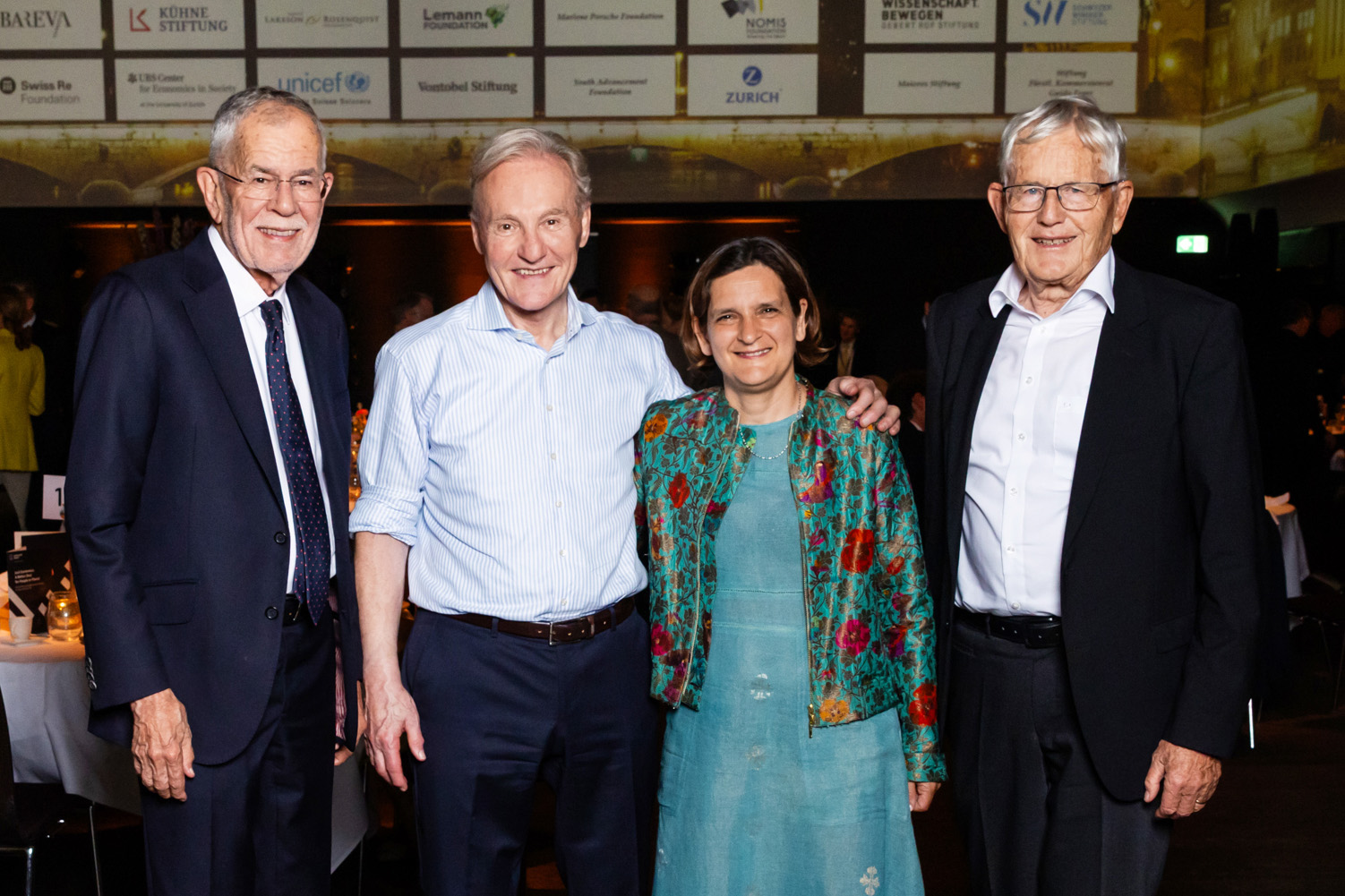
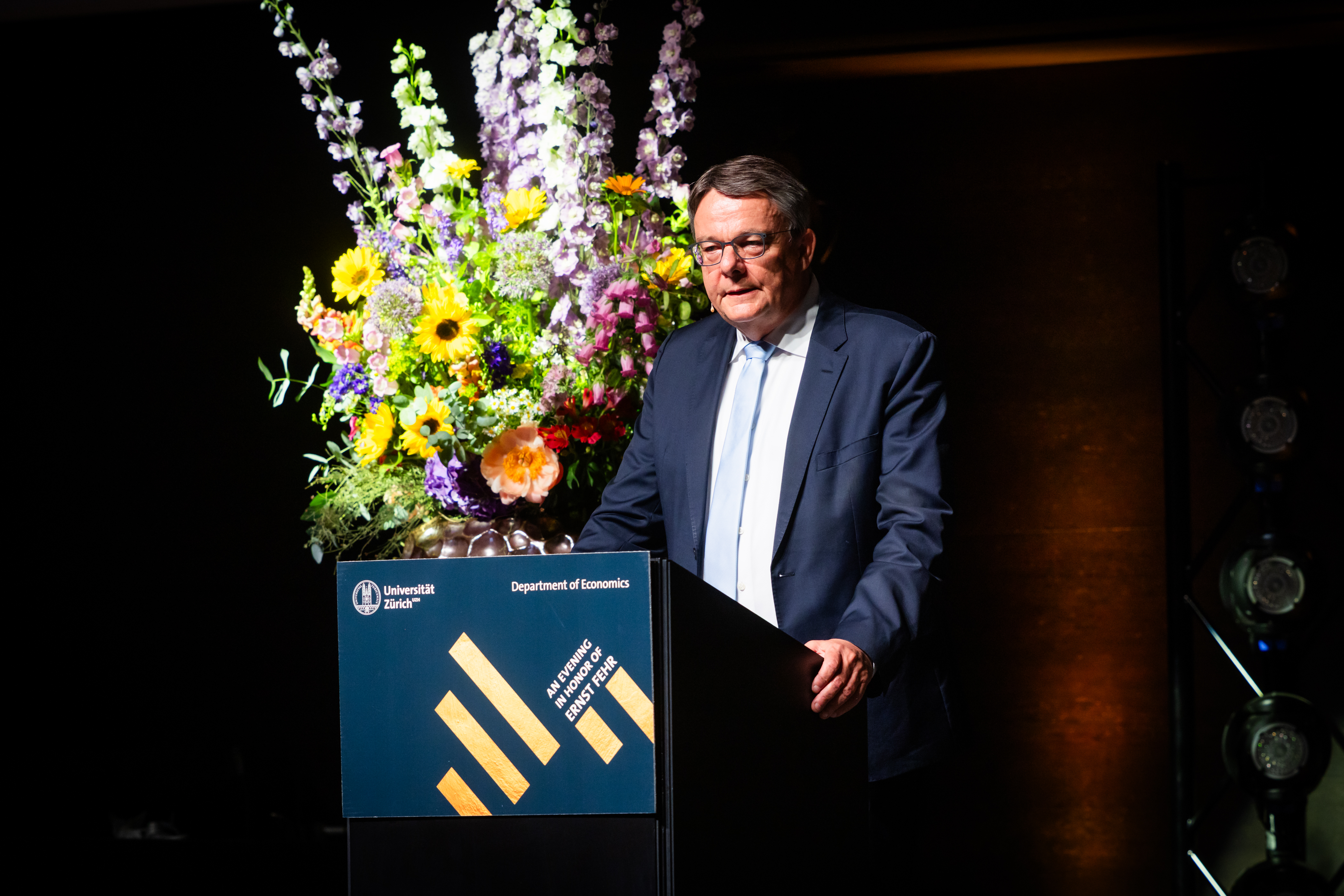
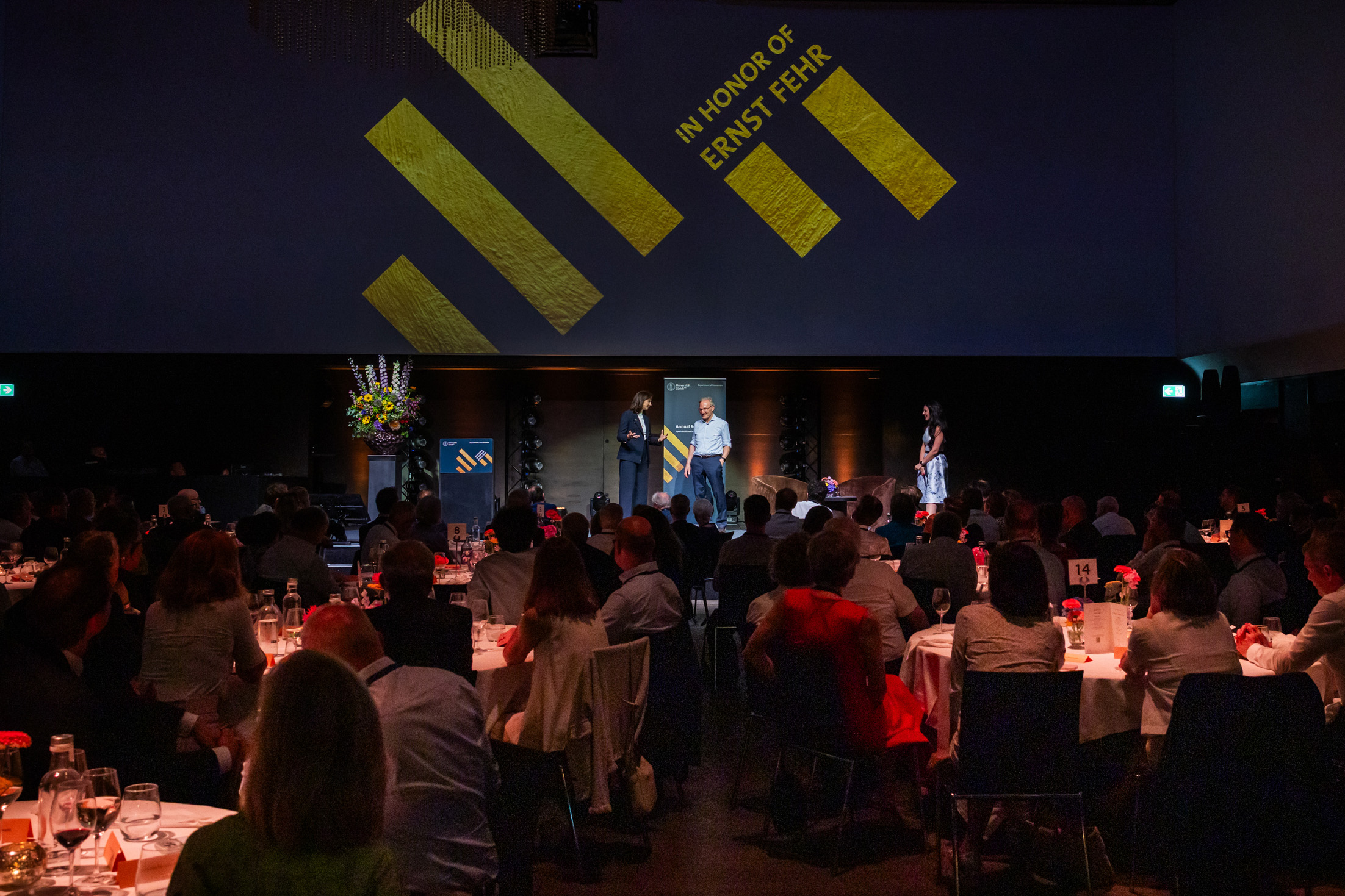
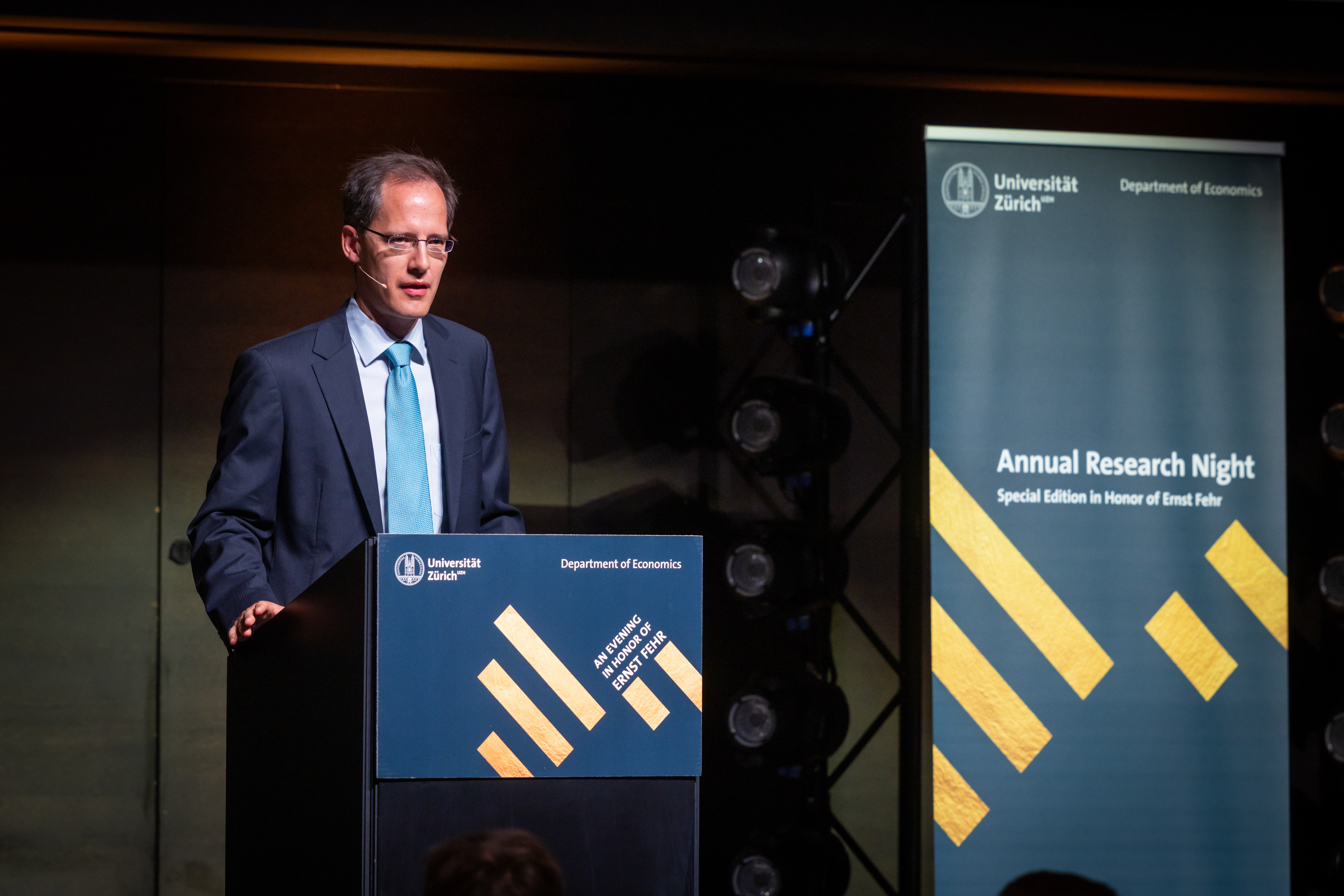
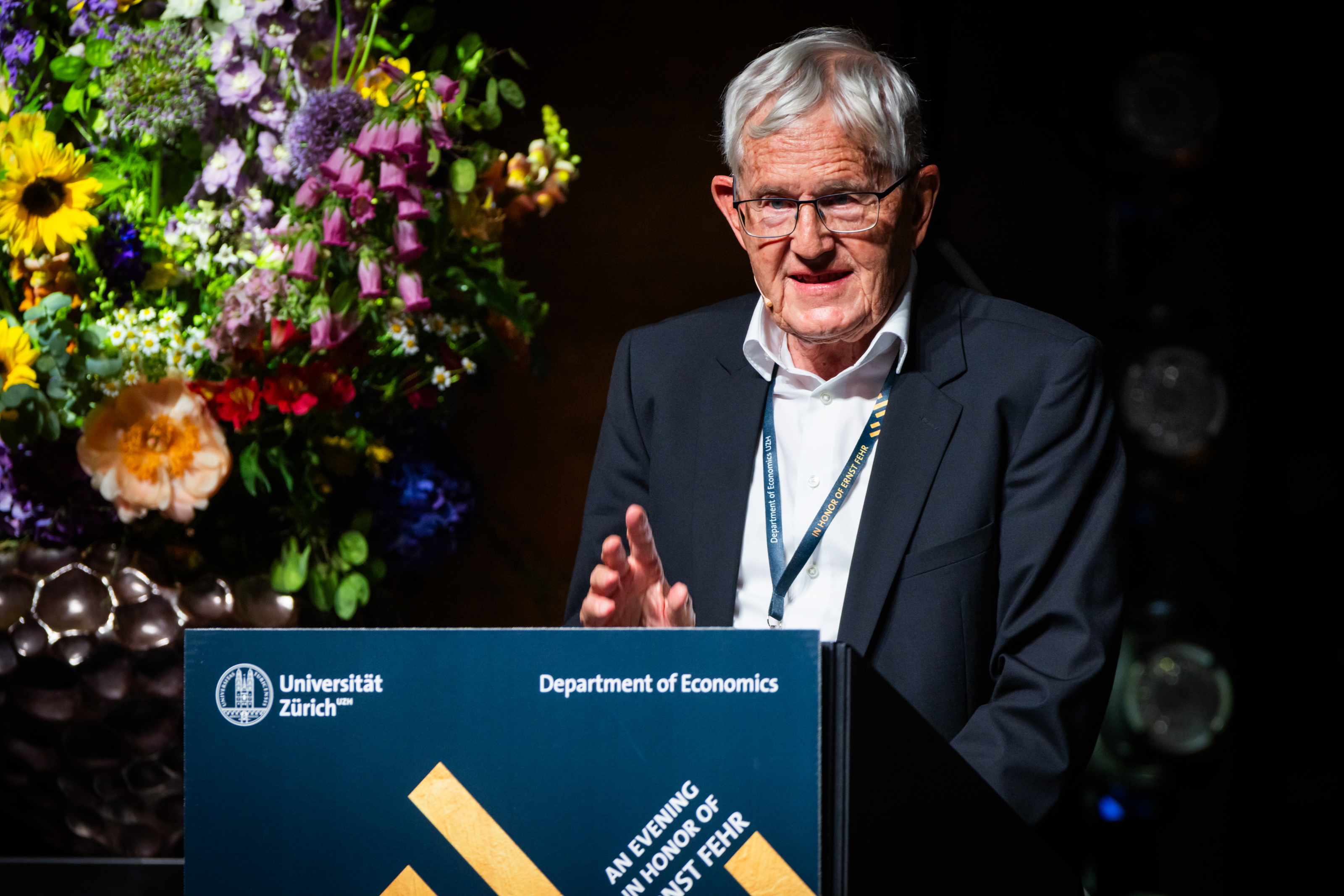
The 2026 Annual Research Night celebrated the 70th birthday of Ernst Fehr while showcasing the research and ideas shaping the department’s future. The evening featured a keynote by Nobel laureate Esther Duflo, who presented a bold new vision for addressing climate change through fairness, international cooperation, and evidence-based policy. The celebration also included a personal tribute by former Swiss Federal Councillor Kaspar Villiger, honoring Ernst Fehr’s extraordinary scientific achievements and his lasting impact on the Department of Economics. Austrian Federal President Alexander Van der Bellen attended the celebration as a special guest to honor Ernst Fehr.
Just Economics: A Better Deal for People and Planet
How can climate policy become both more effective and more equitable? In her keynote, Nobel laureate Esther Duflo argued that climate change is fundamentally a question of fairness. She presented a new proposal for international climate cooperation built on the principle that those who contribute most to climate change should also bear greater responsibility for addressing its consequences. Her FAIR framework offers a pragmatic blueprint for combining emissions reductions with meaningful support for the world’s most vulnerable populations.
Research Slam
In three concise and engaging presentations, Department of Economics faculty members showcased how cutting-edge research can generate insights into today’s most important economic and societal challenges:
Ingvild Almås: Fairness Across the World
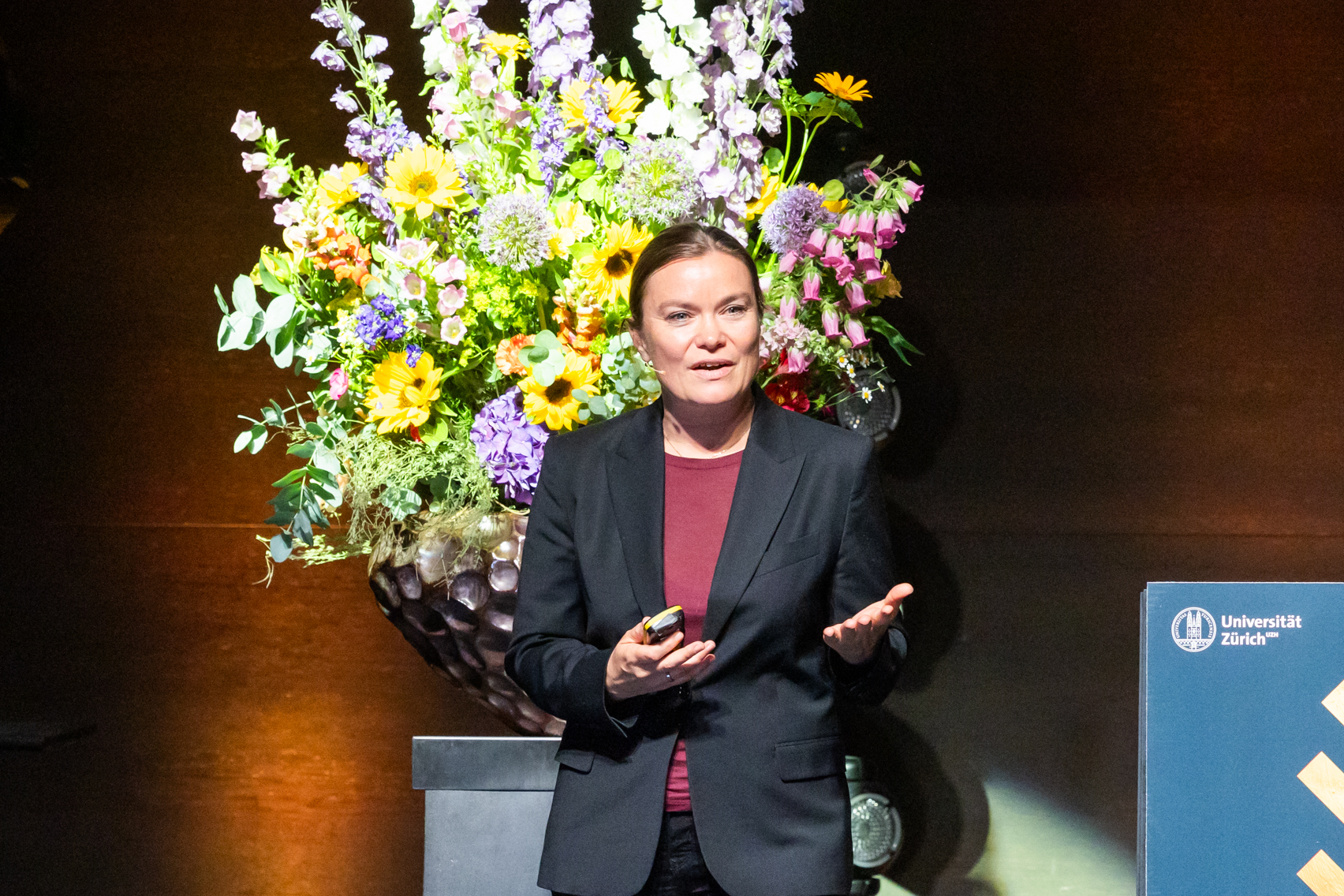
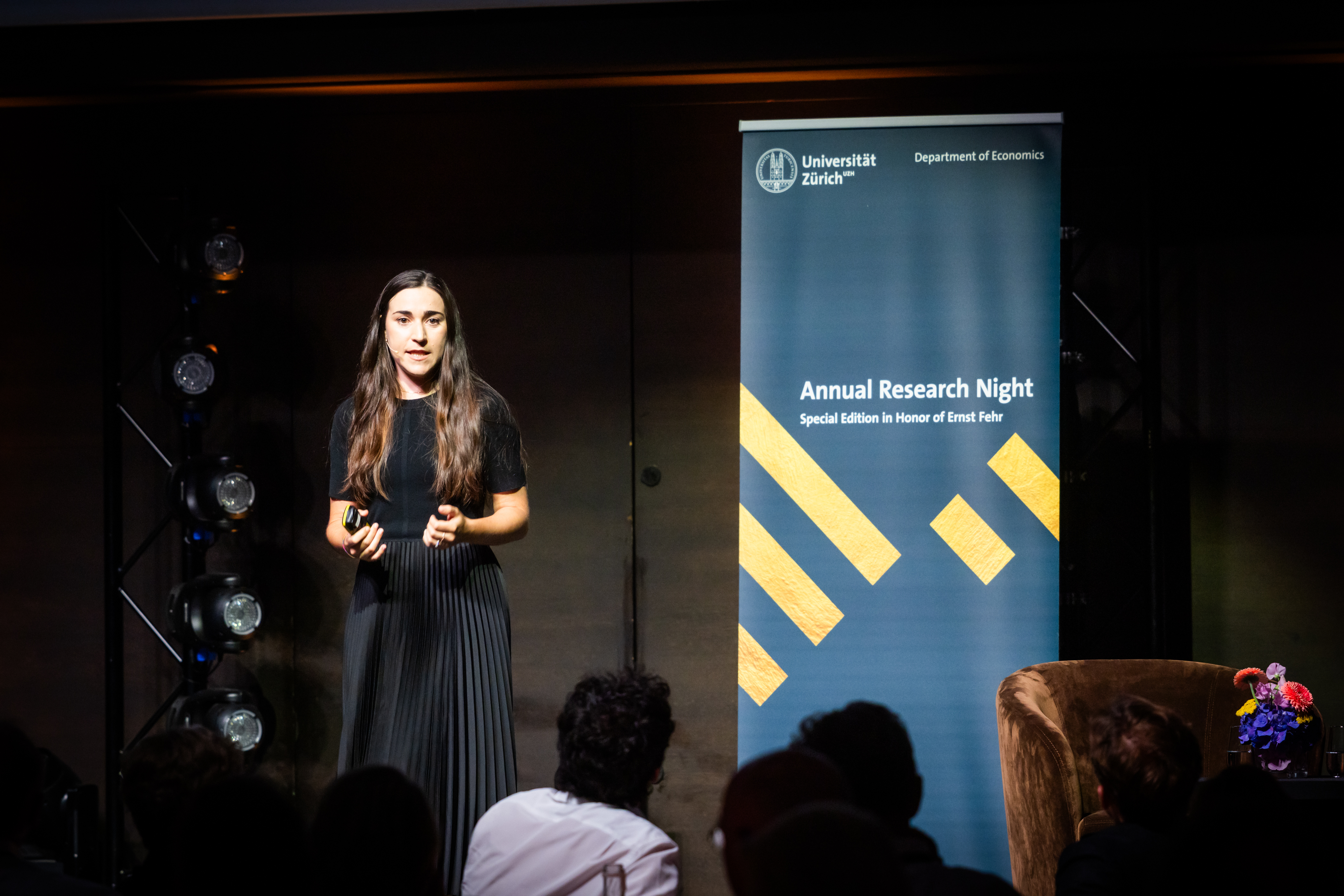
What kinds of inequality do people consider fair? Drawing on large-scale experiments involving participants from 60 countries, Ingvild Almås explored how people distinguish between inequalities arising from luck, merit, and efficiency. Her findings show that fairness considerations play a central role in shaping attitudes toward inequality across cultures.
Ralph Ossa: Global Trade at a Crossroads
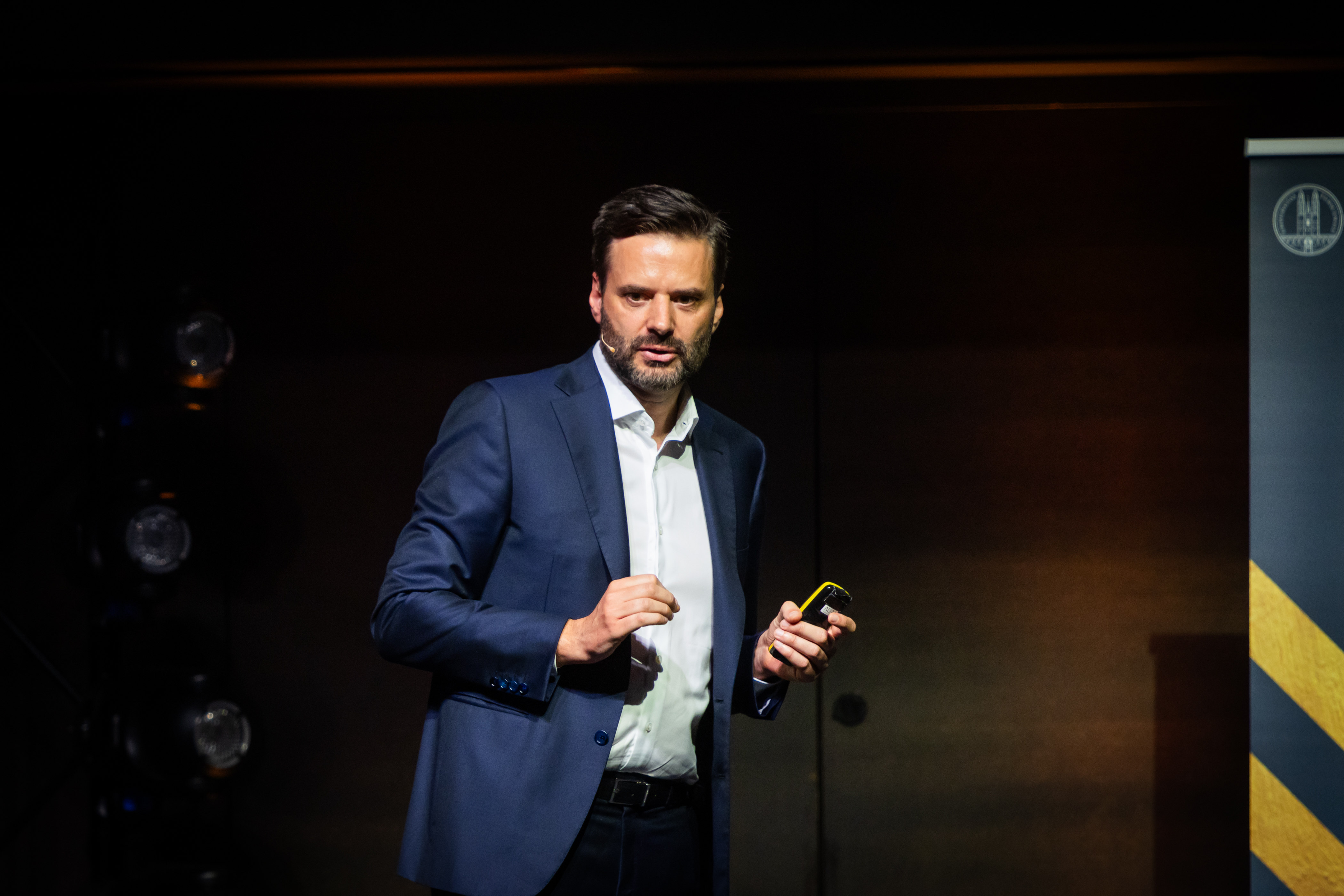
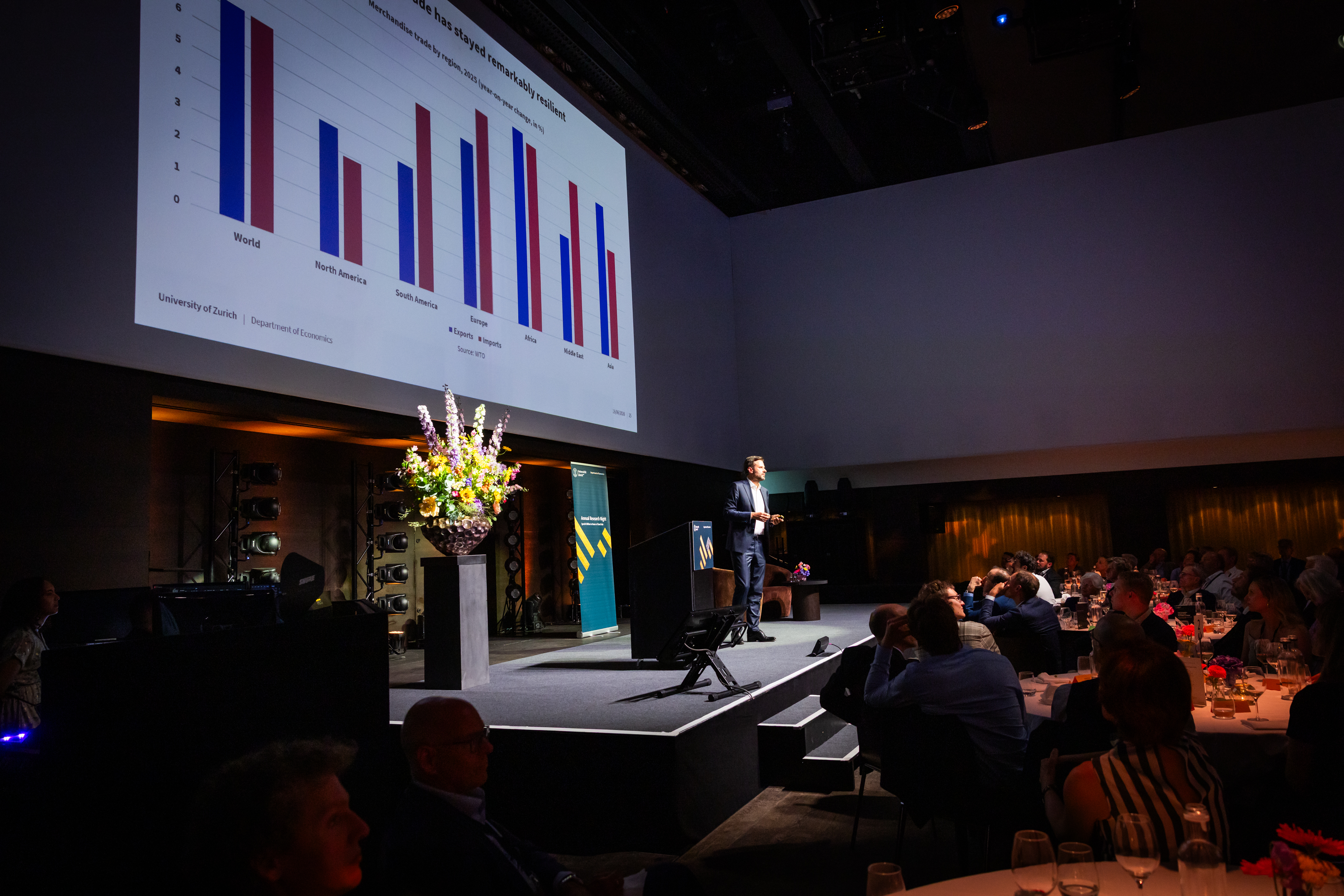
Despite rising geopolitical tensions and increasing protectionism, global trade has proven remarkably resilient. Ralph Ossa explained why the rules-based trading system continues to provide stability and how the rapid expansion of AI-related industries is creating new opportunities for global trade.
Carmen Villa: Does Housing Design Drive Gang Formation?
Can the design of cities influence organized crime? Carmen Villa presented new evidence showing how post-war public housing in London contributed to gang formation decades later. Her research highlights the lasting consequences of urban planning decisions and the importance of well-designed neighborhoods.
Media coverage
In a wide-ranging interview with NZZ am Sonntag, Ernst Fehr reflects on his scientific career, his vision of economics, and the challenges ahead. He discusses fairness, the limits of the homo oeconomicus, and why he is increasingly concerned about the resilience of democracy.
Read the interview (English translation)
Read the original interview in German by Peter Fischer and Thomas Fuster
Impressions
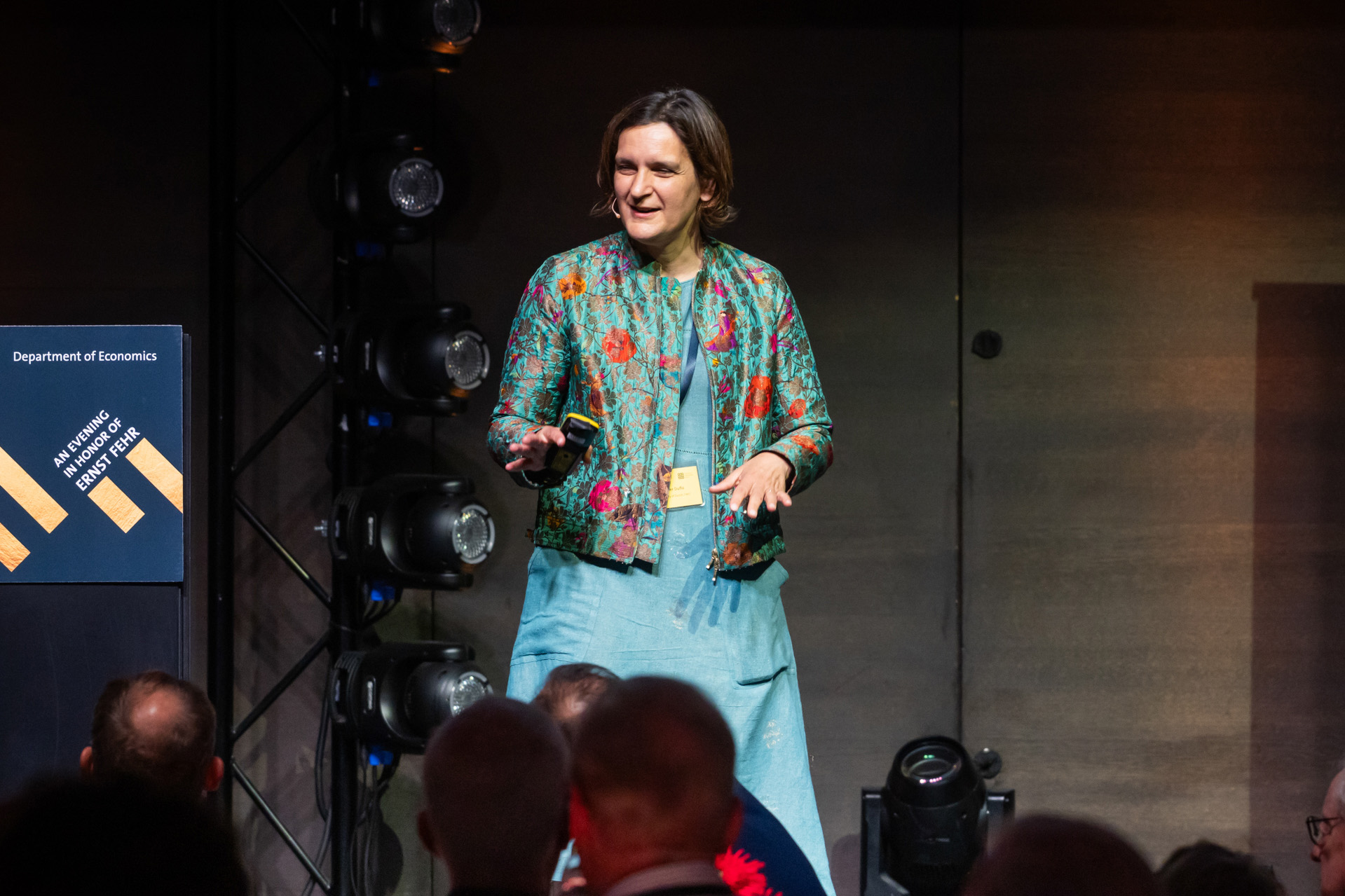
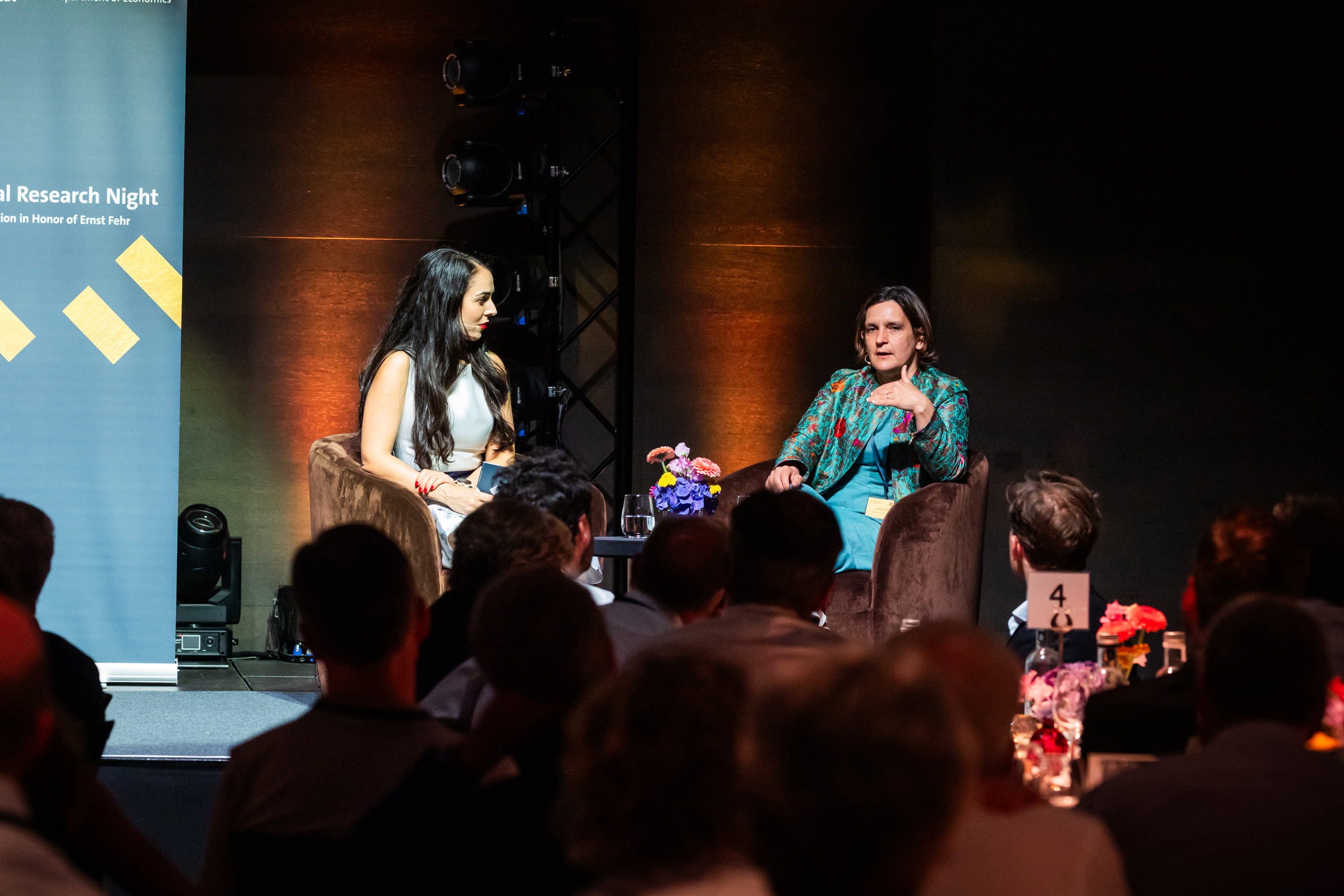
The only solution is to put vulnerable people and vulnerable countries at the heart of the climate effort.
Nobel laureate Prof. Esther Duflo
Festivities and Academic Conference in Honor of Ernst Fehr
Ernst Fehr is Professor of Economics at the University of Zurich, and his work has fundamentally influenced our understanding of how social motives and norms shape cooperation, markets, organizations, and political behavior. A global thought leader in behavioral economics, his research has earned widespread recognition, both in academia and in the public sphere.
Fehr has shaped the Department of Economics for more than three decades – as a pioneering researcher, dedicated teacher, former Director of the department, and as the driving force behind the creation of both the Excellence Foundation Zurich and the UBS Center for Economics in Society.
In honor of his 70th birthday in June 2026, the Department of Economics and the University of Zurich organized a series of events to celebrate his contributions to science and academic life.